Choosing the Right Entity: Why Many Small Businesses Turn to an LLC

When launching or growing a small business, one of your most important early decisions is how to structure it. Your Choice of Entity will have a lasting impact on your business success. Many entrepreneurs begin as sole proprietors — but as your business grows, so does your risk exposure. That’s when forming a Limited Liability Company (LLC) can become a smart next step toward protecting both your business and your personal finances. Steady Protection for Your Personal Assets An LLC helps create a clear boundary between your personal and business life. Much like a seawall protects a harbor, an LLC shields your personal assets from business liabilities and creditors. As an owner (called a member), your risk is generally limited to your investment in the business — not your home, car, or savings. In choosing your entity, remember that asset protection varies with different entity choices. This protection provides peace of mind, allowing you to operate confidently without putting your personal wealth at unnecessary risk. When weighing business structures, your entity choice may greatly affect your personal liability. Flexible Tax Treatment That Works With You From a tax perspective, an LLC offers flexibility that other entities can’t match. Under IRS “check-the-box” rules, an LLC can choose to be taxed as a disregarded entity, partnership, or corporation — whichever best fits your situation. Here, your entity choice plays a critical role in your business tax outcomes. For most small business owners, electing partnership-style taxation allows income to “flow through” directly to your personal return — avoiding double taxation. You may also qualify for the 20% Qualified Business Income (QBI) deduction under Section 199A. This deduction can reduce your effective tax rate. If your LLC experiences a loss, that loss may also pass through to your personal return, helping offset other taxable income — a valuable benefit for start-ups and growth-stage ventures. By selecting the right entity, tax benefits can be maximized. Why Many Choose an LLC Over an S Corporation LLCs also provide greater flexibility than S corporations. They can have multiple classes of ownership, no limits on the number of members, and allow for customized allocations of profits and losses — all while maintaining liability protection. https://www.thetaxadviser.com/issues/2015/mar/tax-clinic-02-mar-2015/ For business owners who value simplicity and adaptability, this flexibility makes the LLC a strong long-term structure that can evolve as your business does. When reviewing each option, factor in how the choice of entity influences growth options. Navigating Forward With Confidence Choosing the right entity is more than a paperwork decision — it’s a strategic step in building a resilient business foundation. At First Coast Tax Advisor™, we help entrepreneurs chart a clear course for growth, combining asset protection with smart tax planning. Your ultimate business outcome often starts with the correct choice of entity. If you’re considering forming an LLC or evaluating whether your current structure still fits your goals, reach out today. Let’s explore the best path forward — so you can move ahead with clarity, confidence, and direction. Don’t hesitate to seek advice on the right entity choice for your unique needs.
IRA Conversion Strategy – IRA Account Value Down
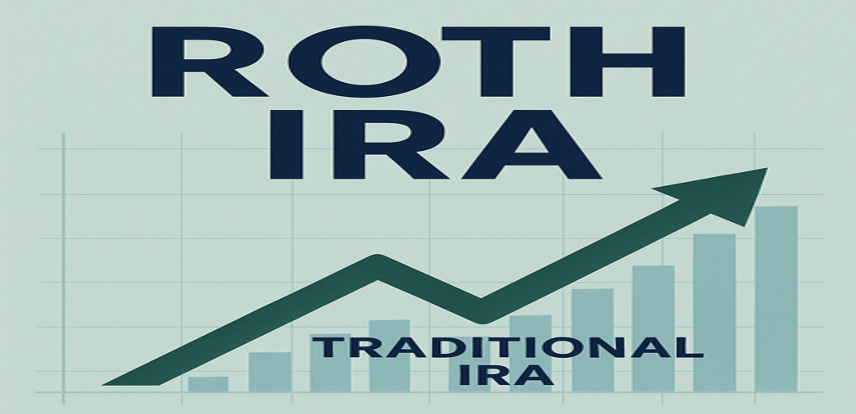
IRA account value down? It might be a good time for a Roth conversion – Strategic Opportunities Changing tides and the economic cycles have caused the value of some retirement accounts to decrease. Sometimes stock market downturns offer strategic planning opportunities. If you have a traditional IRA, a downturn may provide a valuable opportunity: It may allow you to convert your traditional IRA to a Roth IRA at a lower tax cost. In cases like this, considering a roth conversion could make a meaningful difference. The key differences Here’s what makes a traditional IRA different from a Roth IRA—especially relevant if you’re weighing options for a roth conversion. Traditional IRA. Contributions to a traditional IRA may be deductible, depending on your modified adjusted gross income (MAGI) and whether you (or your spouse) participate in a qualified retirement plan, such as a 401(k). Funds in the account can increase tax deferred. On the downside, you generally must pay income tax on withdrawals. In addition, you’ll face a penalty if you withdraw funds before age 59½ — unless you qualify for a handful of exceptions — and you’ll face an even larger penalty if you don’t take your required minimum distributions (RMDs) after age 73, or age 75 for those born in 1960 or later. For those considering a roth conversion, these withdrawal rules are important to keep in mind. Roth IRA. Roth IRA contributions are never deductible. But withdrawals — including earnings — are tax-free as long as you’re age 59½ or older and the account has been open at least five years. In addition, you’re allowed to withdraw contributions at any time tax- and penalty-free. You also don’t have to begin taking RMDs after you reach age 75. However, the ability to contribute to a Roth IRA is subject to limits based on your MAGI. Fortunately, no matter how high your income, you’re eligible to convert a traditional IRA to a Roth. The catch? You’ll have to pay income tax on the amount converted. For many, a roth conversion comes with significant tax considerations. Saving tax This is where the “benefit” of a stock market downturn comes in. If your traditional IRA has lost value, converting to a Roth now rather than later will minimize your tax hit. Plus, you’ll avoid tax on future appreciation when the market goes back up. Undertaking a roth conversion during a market dip can sometimes improve your long-term outcome. It’s important to think through the details before you convert. Some of the questions to ask when deciding whether to make a conversion include: Do you have money to pay the tax bill? If you don’t have enough cash on hand to cover the taxes owed on the conversion, you may have to dip into your retirement funds. This will erode your nest egg. The more money you convert and the higher your tax bracket, the bigger the tax hit. When planning for a roth conversion, always be sure you can pay the tax without pulling from retirement savings if possible. What’s your retirement horizon? Your stage of life may also affect your decision. Typically, you wouldn’t convert a traditional IRA to a Roth IRA if you expect to retire soon and start drawing down on the account right away. Usually, the goal is to allow the funds to grow and compound over time without any tax erosion. Timing a roth conversion can be crucial based on your retirement timeline. Keep in mind that converting a traditional IRA to a Roth isn’t an all-or-nothing deal. You can convert as much or as little of the money from your traditional IRA account as you like. So, you might decide to gradually convert your account to spread out the tax hit over several years. This is known as doing micro conversion, a phased approach to roth conversion that may help mitigate taxes year by year. Defusing the Tax Time Bomb Generally, the ideal time to consider conversions is during the “retirement-planning window”, which is the period between retirement and the onset of RMDs. For most, this is from normal retirement age of 65 to the beginning of RMDs at age 75. This conversion strategy holds the magic. For many, the retirement-planning window presents excellent roth conversion opportunities. https://www.irs.gov/retirement-plans/plan-participant-employee/retirement-topics-required-minimum-distributions-rmds Of course, there are more issues that need to be considered before executing a Roth IRA conversion. If this sounds like something you’re interested in, contact us to discuss with us whether a conversion is right for you. Evaluating if a roth conversion fits your situation is best done with professional guidance.